Maïssane Alibrahimi FR/MA
Taking Stock
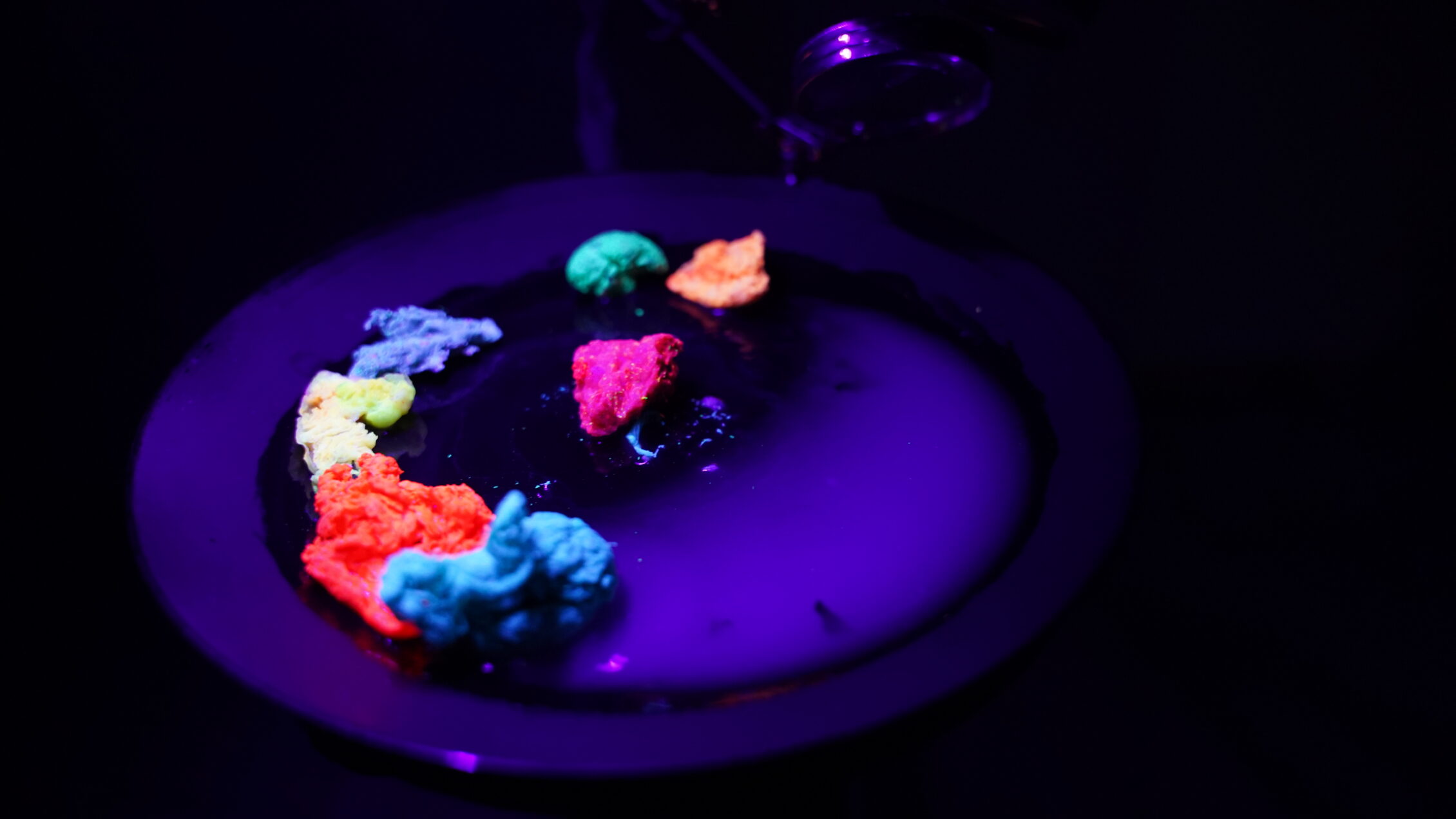
Le Bruit des Silencieuses, sound installation
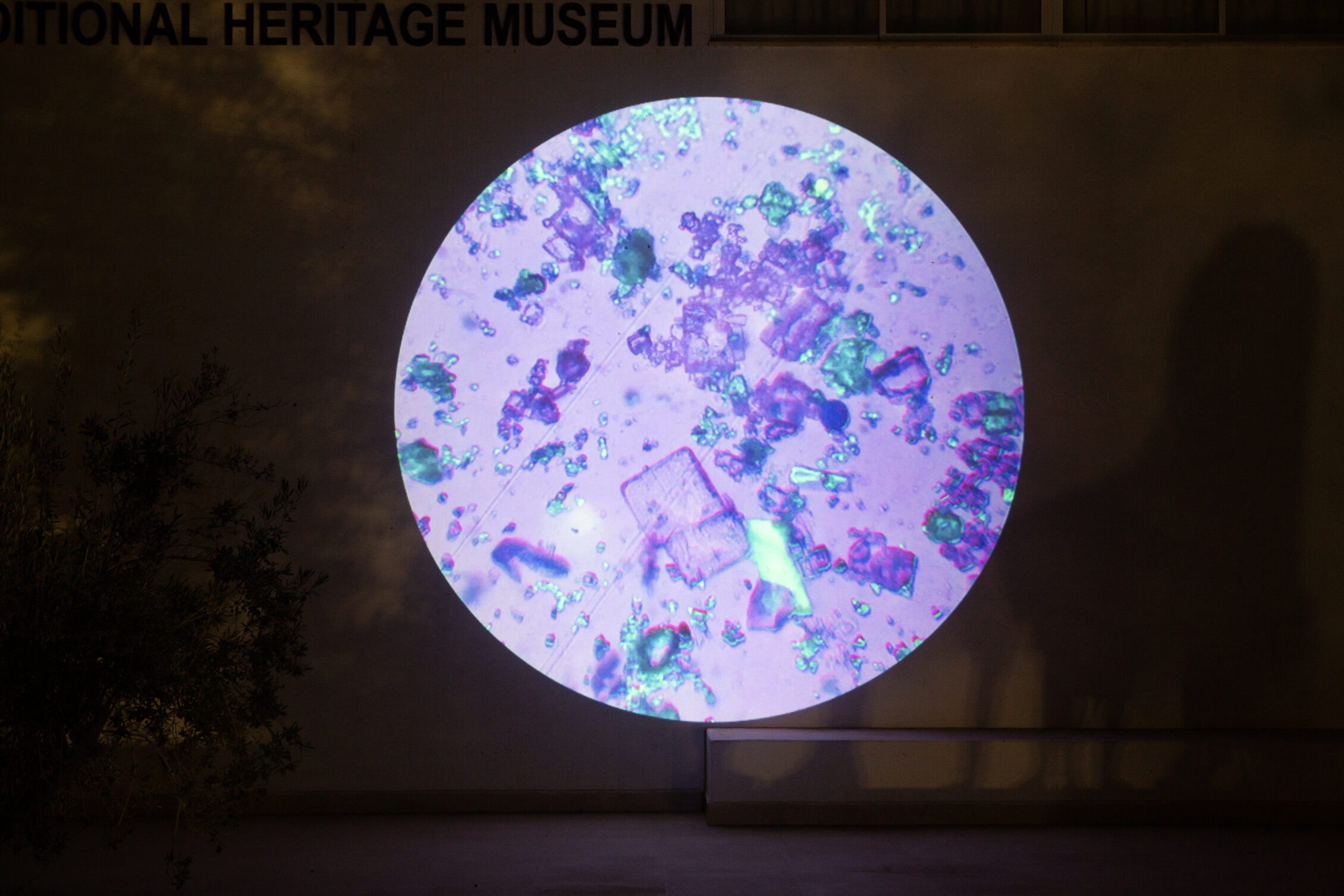
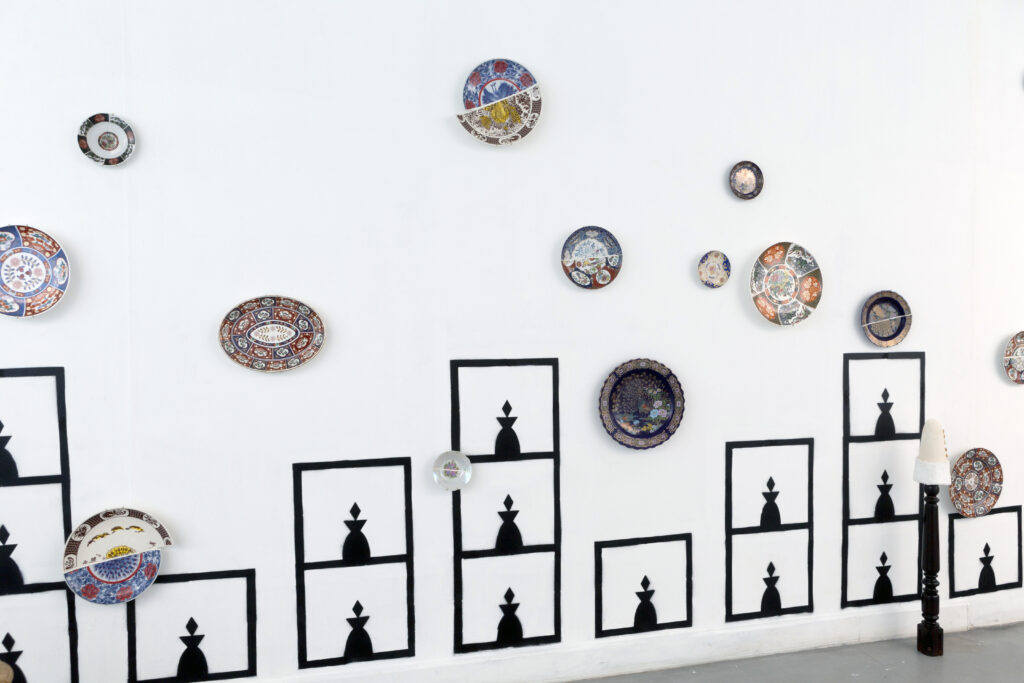
Sommaire by Taous Imari, visual installation
Bouss Mat’khafch, video installation
“Mediterranean Voices” Exhibition
October 30 through January 17, 2027
Every day except Tuesday, from 10:00 a.m. to 12:30 p.m. and from 1:30 p.m. to 5:00 p.m.
Pavillon de Vendôme
Aix-en-Provence
Credits
Inventory taking Maissane Alibrahimi Co-production Musée du Pavillon de Vendôme
The Sound of Silent Women Maissane Alibrahimi Co-production: Shamsi El Bouhali.

*Le Bruit des Silencieuses* is an interactive sound installation that transforms household objects into autonomous devices of protest. Inspired by the *cacerolazo*, a collective act of protest, the project reimagines noise as a political language. Powered by motors and sensors, the objects clatter and vibrate, producing a mechanical cacophony that straddles chaos and rhythm. Associated with care and imposed silence, they become autonomous, resistant, and resonant bodies. The work explores the tensions between private and public spaces and pays tribute to marginalized voices—particularly those of women—by making noise an act of remembrance, healing, and collective emancipation.
Synopsis: Taous Imari explores porcelain as a point of convergence between cultures, through a contemporary reinterpretation of Moroccan wedding traditions and ceramics. Maïssane Alibrahimi focuses on Imari porcelain, which has circulated between China, Japan, and Morocco and has come to symbolize wealth and refinement. By reimagining these objects, she alters their forms and patterns through a process of fragmentation and recomposition, in which the crack is revealed by a golden line. This subversive gesture challenges their function and highlights the fragility of rituals, while also questioning the role of women and the transmission of domestic traditions.
“Bouss Mat’khafch ” is a video composed of a montage of censored kissing scenes from the telenovela *Amarte así*, which aired on Moroccan television under the title *Ayna Abi* (*Where Is My Father?*). By revealing these missing images, the project examines the censorship of desire, the culture of shame, and the criminalization of love. Through a deliberately overwhelming accumulation of these scenes, the gestures become unsettling, exposing patriarchal norms, the suppression of female agency, and a form of Westernization in these representations. The work invites viewers to let go of these taboos.
Maïssane Alibrahimi
Maïssane Alibrahimi is a Franco-Moroccan artist whose practice examines power dynamics, patriarchal structures, and the narratives and construction of femininity through a feminist and decolonial lens. She explores the tensions between gentleness and resistance, tradition and subversion, by using symbolic and domestic materials that she transforms into fragile, ornate, and evolving structures, at the intersection of sculpture, installation, and mechanical performance.
Drawing on the intimacy of the home, she extracts gestures, customs, and micro-rituals. Her work draws on the latent qualities of objects, ceremonial codes, and domestic images, exploring how the body marks its presence in time and space. By bringing these ordinary forms to life, she uncovers fragments and totems of everyday life whose banality masks their symbolic significance.
Based on assembly, stacking, and the ephemeral, she develops an aesthetic of imbalance and transformation. Her gestures, both meditative and transgressive, deconstruct standardized forms to reveal the latent violence embedded in economic, social, familial, and spiritual structures.
Sensitive to cultural transmission and contradictory legacies, she subverts the conventions of ornamentation, traditional symbols, and rituals, reconfiguring them as spaces for critical engagement and as strategies for emancipation, displacement, and reappropriation.
A graduate of Villa Arson (Nice) and holder of an international MBA in Art from IESA (Paris), she lives and works between Paris and Rabat. In 2024, she was selected for the Arab Artists Now – Feminist Legacies program organized by K-oh-llective and Lina Ramadan. In 2025, she received the Audience Award at the Prix Icart Artistik Rezo and the Jury Prize at the Prix Dauphine for Contemporary Art, alongside curator Juliette Hage.