Le renard et la baleine FR
Je suis venu·e du ciel en bateau
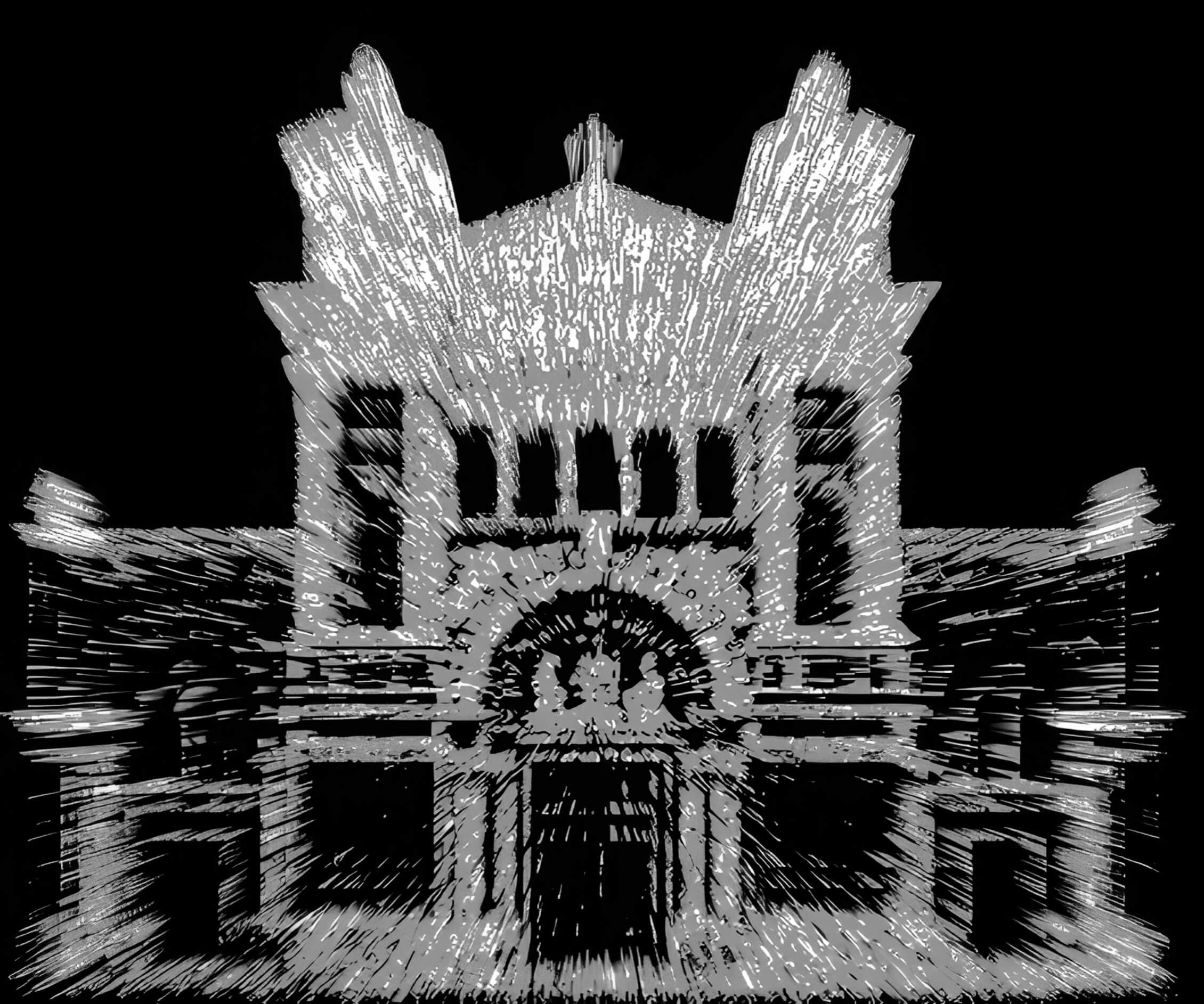
Mapping and performance
A tour of artworks in public spaces as part of the Aix Biennale
Friday, October 30, and Saturday, October 31
from 7:00 p.m. to 11:00 p.m.
Performances every 30 minutes
Place Romée de Villeneuve
Aix-en-Provence
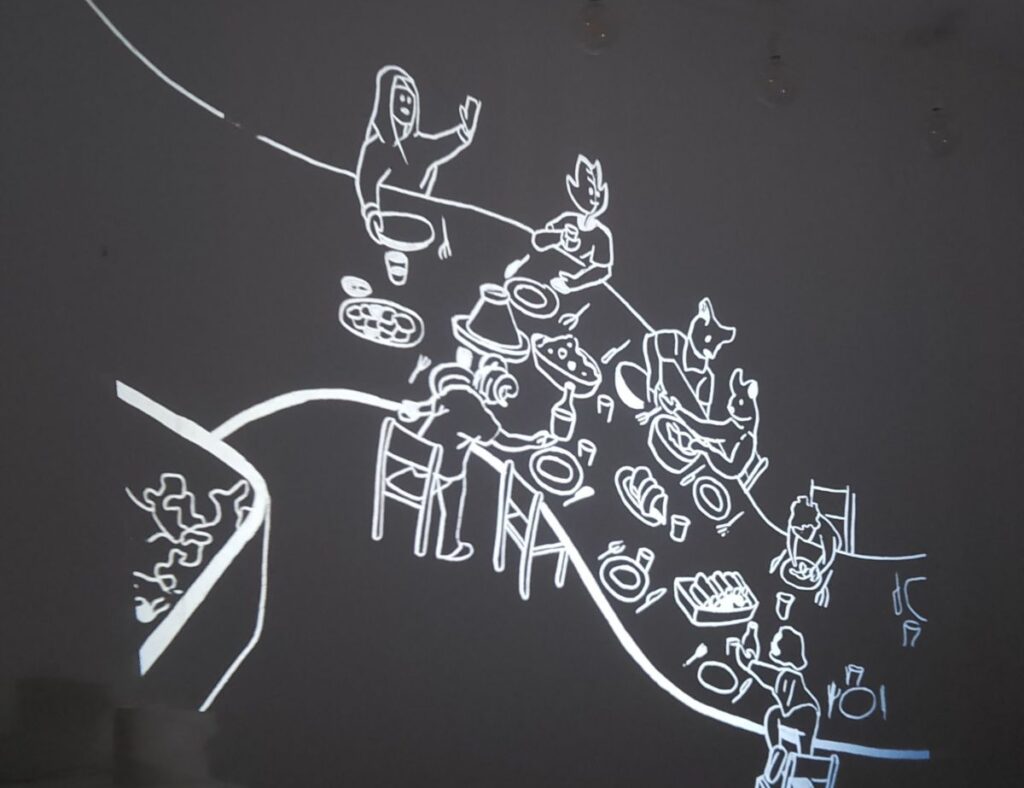
This performance is a sensitive, documentary-style work that explores the concept of travel, shifting the focus from the idealized and glorified notion of travel to its constrained, unequal, and political forms. Starting with a simple question—“What is your most memorable travel experience?”—the project contrasts two realities: travel as an experience of emancipation, and travel as a vital, sometimes irreversible necessity.
By giving a voice to people directly affected by immigration, the show reveals the diversity of their journeys, statuses, and experiences, while demonstrating how these are often overshadowed by oversimplifying categories (“immigrant,” “expat,” “foreigner”). It highlights how these words—far from being neutral—reflect power dynamics, inherited in particular from France’s colonial history, and give rise to different forms of recognition, legitimacy, and violence.
Building on previous work conducted at the Citadelle de Marseille on the right to cultural heritage and the silenced voices of those who shape it, the performance extends this approach by focusing on those who build communities without always having the right to inscribe their own history within them. The title *Je suis venu du ciel en bateau* (*I Came from the Sky by Boat*), inspired by a personal account, serves as the poetic and political anchor for a new theatrical exploration.
By weaving together personal stories, everyday speech, and fragments of lives, the play seeks to nuance perspectives, avoid any simplistic hierarchy of suffering, and bring to light the most invisible forms of oppression. It aims to generate context-specific knowledge, foster empathy, and challenge the perceptions of audience members who may be uninformed or influenced by dominant media narratives.
The performance is thus conceived as a space for connection, where travel is no longer merely a geographical journey, but a lens through which to examine contemporary inequalities, historical legacies, and the ways in which a society chooses—or chooses not to—welcome the stories of those who pass through it.
Le renard et la baleine
Manon Lefébure is a visual artist and designer whose work lies at the intersection of craftsmanship and writing. Using intimate feelings as her raw material, she seeks to evoke collective and universal emotions in her audience—with whom she often collaborates—through her objects. In her singing practice, Manon Lefébure—under her pseudonym Miaule Mort—uses a vocal looper that allows her to set stories to music live.