Cecilie Waagner Falkenstrøm DK
I see it so you don’t have to
Installation
Exhibition : “Disobedience in the Digital Age”
From October 23 to December 13, 2026
From Wednesday to Sunday, 2pm to 7pm
Friche la Belle de Mai
La Tour, 4th floor
Marseille
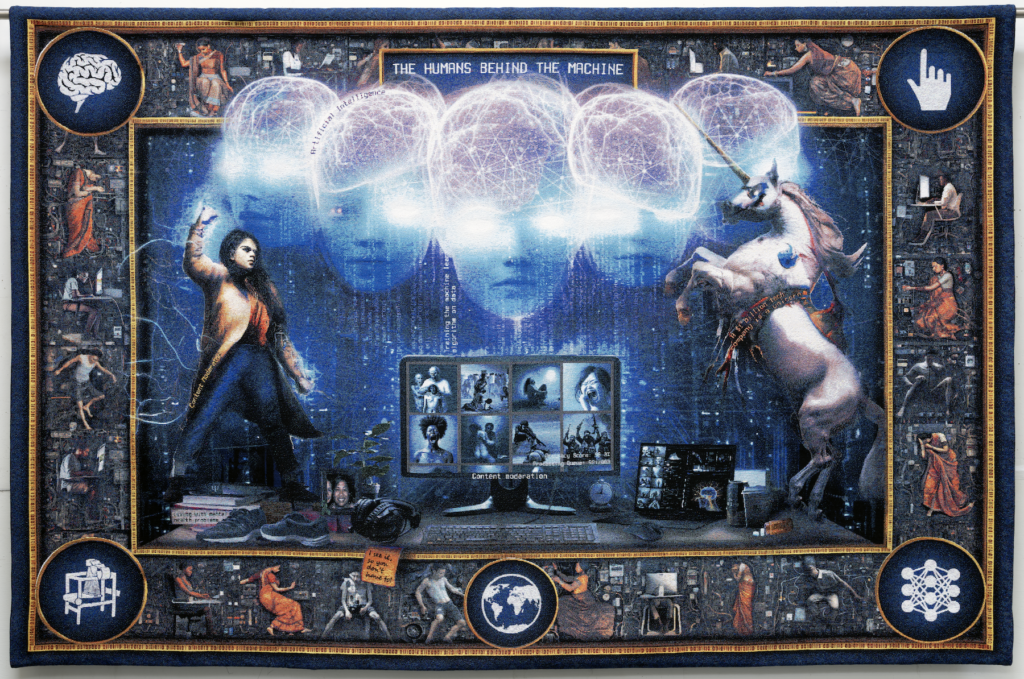
This work upends traditional power dynamics by using AI—and more specifically, machine learning—to amplify the voices of the micro-workers it typically exploits. Hidden behind screens and algorithmic processes, the humans working in the shadow of the machine face poor working conditions, time pressure, and automation processes designed solely to optimize the machine’s performance. As a result, they suffer from mental health issues, including stress, anxiety, and depression, stemming from their exposure to disturbing content and endless repetitive tasks. The artist worked closely with content moderators who shared their firsthand experiences with work-related mental health issues.
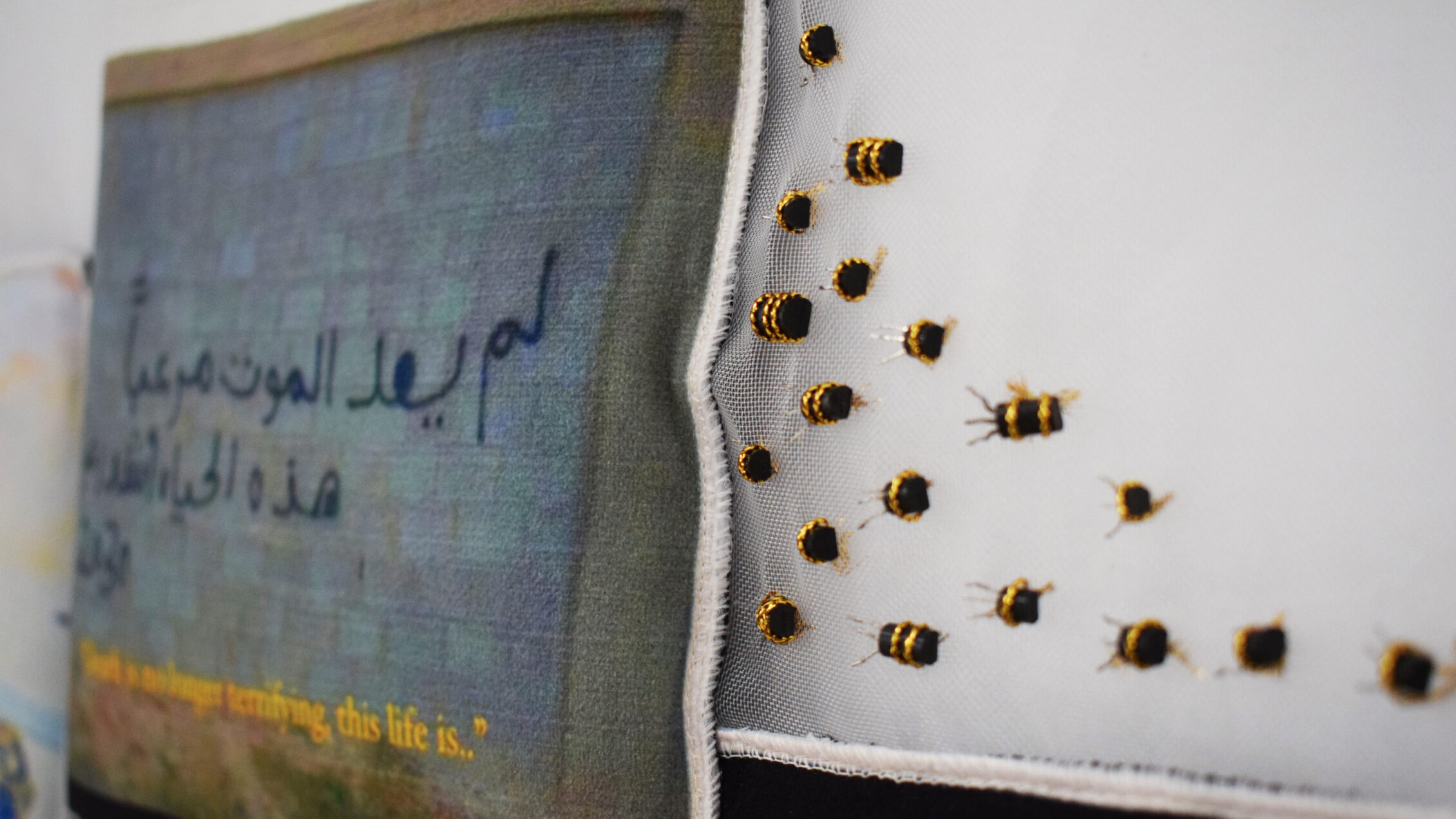
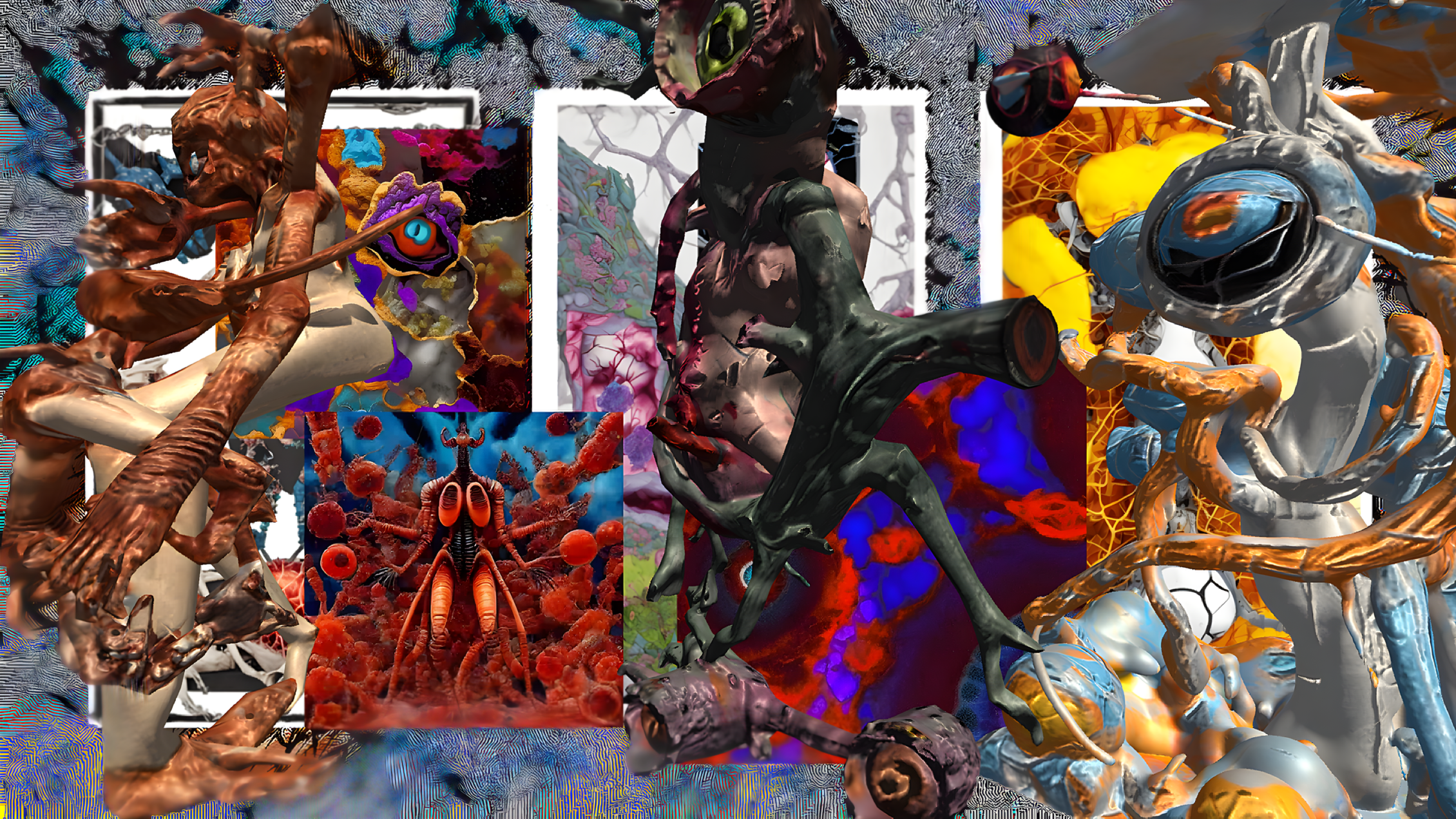
The work is a 2 x 3-meter wall hanging made of cotton and viscose, created using machine learning (diffusion) and woven on a Jacquard loom. By combining machine learning and Jacquard weaving, the work explores the history of industrialized labor practices and their connection to contemporary work with digital data, as both have an impact on workers’ mental health. The work examines how AI-driven labor echoes the labor dynamics of the First Industrial Revolution, when textile workers endured harsh conditions to ensure that Jacquard looms never stopped running. Governments intervened at that time to protect workers’ rights. Today, how can we prioritize the mental health of the people behind the machines?
Cecilie Waagner Falkenstrøm
Cecilie Waagner Falkenstrøm is an award-winning artist who, since 2016, has been a pioneer in the use of artificial intelligence (particularly LLM and GPT models). His works have been exhibited at the Victoria and Albert Museum (V&A), Ars Electronica, the Kennedy Center, the Wellcome Collection, and Copenhagen Contemporary. In particular, she created the very first work of art using AI and blockchain in space, aboard the NASA-managed section of the International Space Station. His contributions to digital art have been praised by major media outlets such as Forbes and The New York Times. Falkenstrøm has received numerous international awards, including the Lumen Prize for Digital Art in 2017 and 2021, an honorable mention at the Prix Ars Electronica in 2023, and the TECHNE Award from the British Arts and Humanities Research Council. She studied fine arts at the University of the Arts London and the Royal College of Art in London.