Lara Tabet LB
Resilience Overflow
Installation
Exhibition “ Solar Futures ”
October 30 through December 12, 2026
Wednesday through Saturday, 2:00 p.m. to 7:00 p.m.
La Manufacture Gallery
Aix-en-Provence
Credits
Co-production: Biofaction, Columbia University’s Post-Conflict Cities Lab.

Resilience Overflow is a multifold project based on the construction of a genetically modified bacterial strain in collaboration with the molecular environmental microbiology laboratory at the national center of biotechnology in Madrid.
The bacterium, isolated from the artist’s gut is hijacked and genetically engineered to incorporate and produce the Human Neuropeptide Y, a gene linked to human resilience, thus becoming a microscopic drug producing factory.
Beirut is marked by a history of cyclical violence including 30 years of civil war. In 2019 the country suffered a financial crisis on top of a pandemic that culminated in the Beirut port’s explosion.In the absence of social healthcare, there is a big medication shortage
especially psychotropic medications in a country that suffers from a nation scale Post Traumatic Stress Disorder.
Resilience is defined as the ability to adapt successfully in the face of stress and adversity; to survive, recover and evolve after a disturbance.
It has often been ascribed to the Lebanese people.
Resilience is also a characteristic of bacterial communities as we often see in
how these microorganisms react to antibiotics by creating mechanisms of escape. If we look into the possible biological basis of resilience, many neurotransmitters are involved including but not limited to human Neuropeptide Y, a small gene produced by the hypothalamus. Many studies have shown its involvement in adaptability to stress and protection from post traumatic stress disorder.
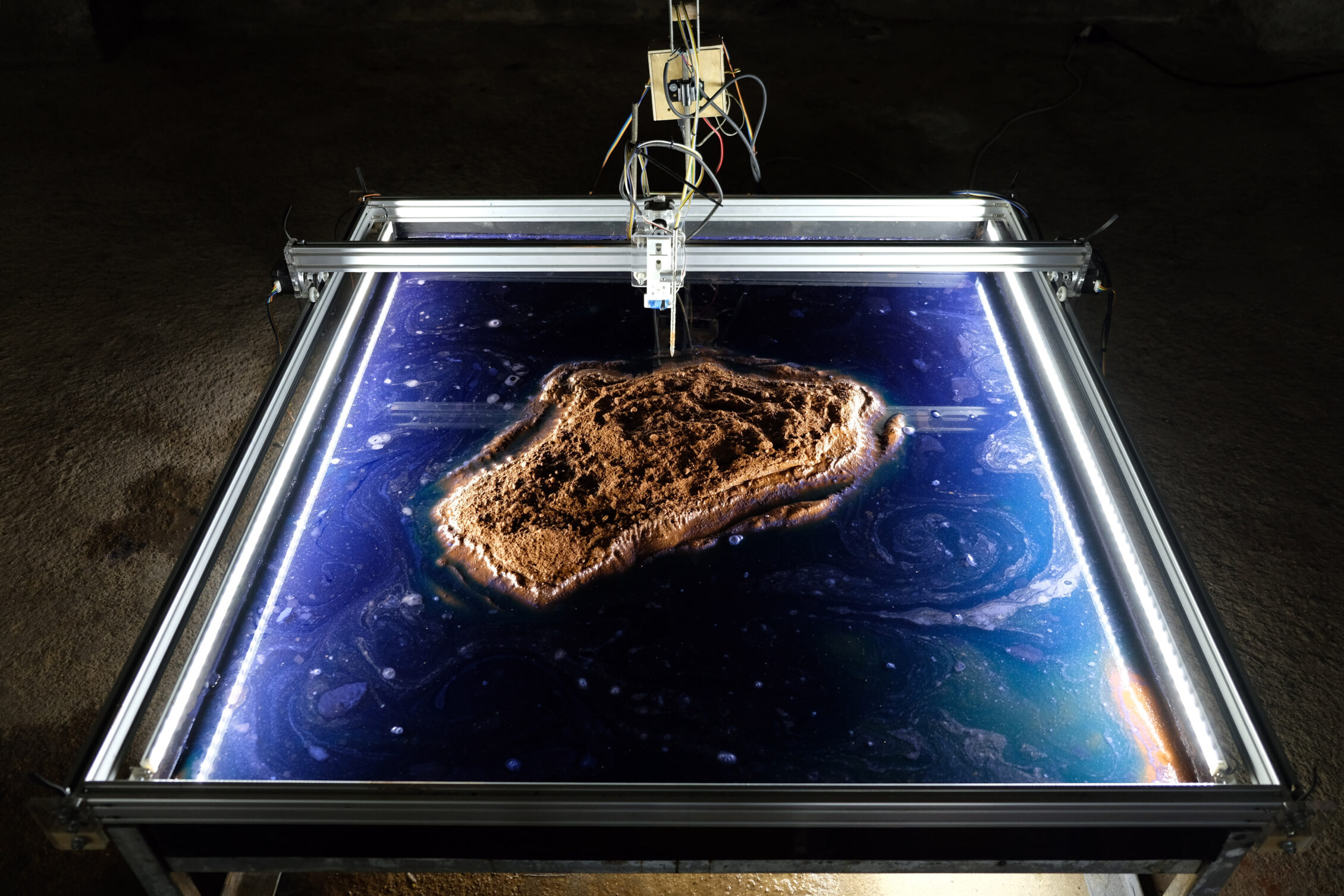
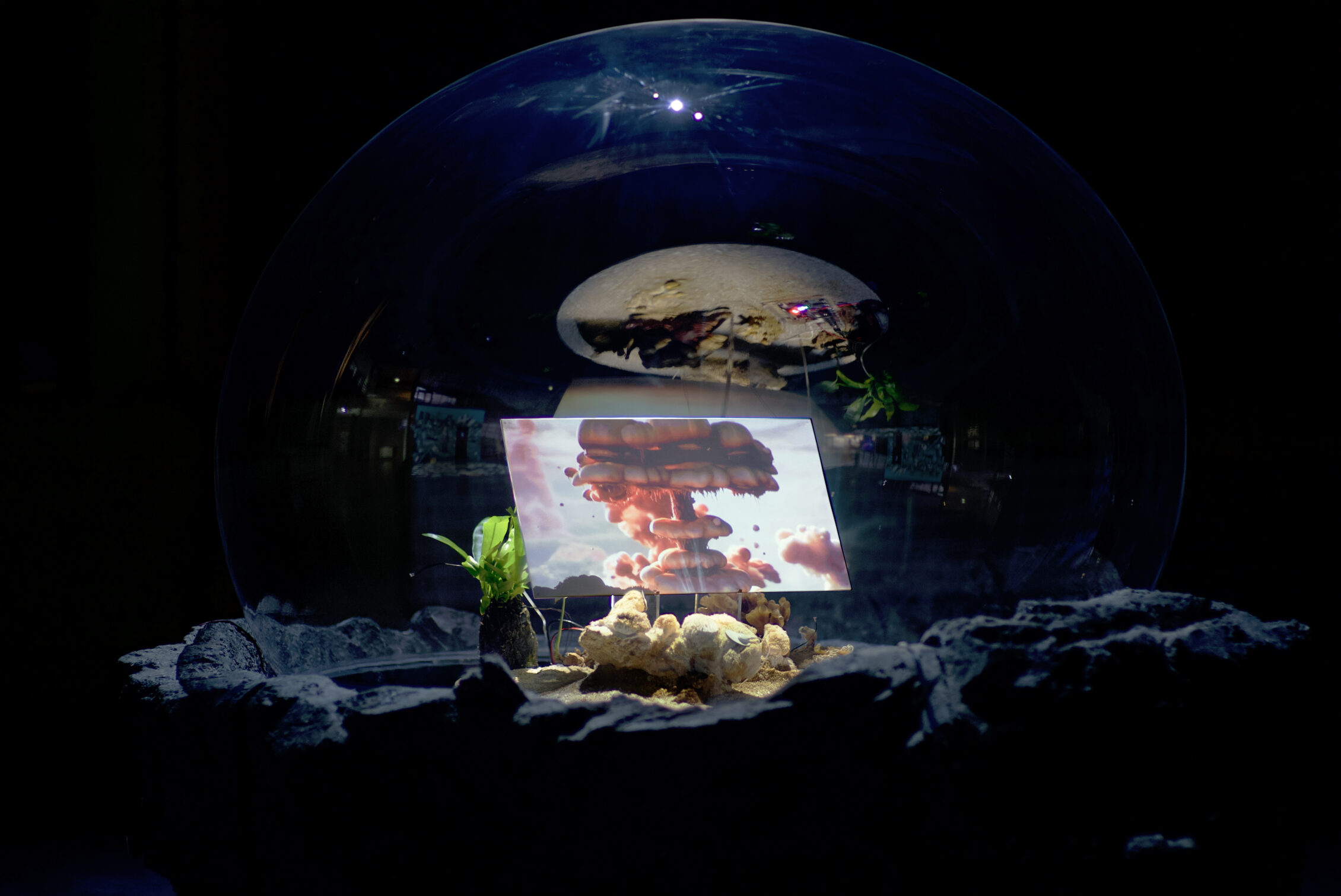
In Resilience Overflow hypothetically consider releasing modified organisms into the environment to remediate the shortcomings of an absent and corrupt government with regards to public health policies. This project consisted of genetically engineering the artist’s own fecal
bacteria to produce the psychoactive human molecule Neuropeptide Y and speculating around the idea of releasing it into Beirut’s water system thus questioning resilience as a political pretext and looking at the role of the individual in the absence of the state as well as possible modes of alliances between the human and the microbiological world.
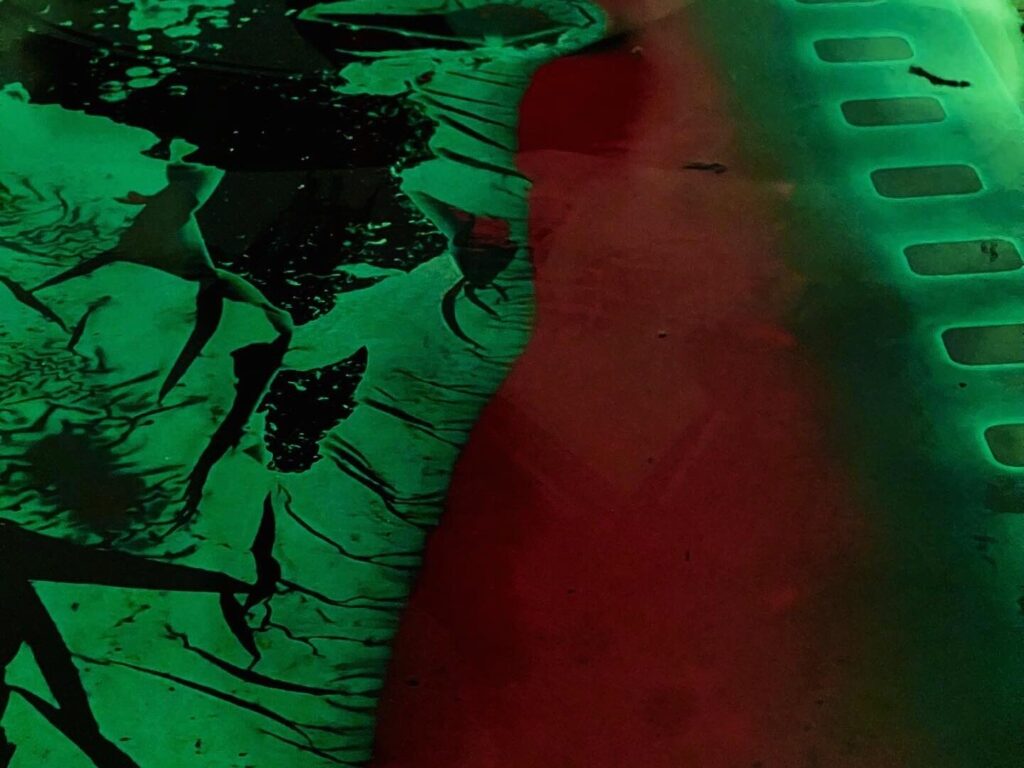
Lara Tabet
Lara Tabet is a physician and transdisciplinary artist working at the intersection of art, ecology, biomedical sciences, and politics. She works in a variety of media, including experimental photography, installation, video, and bioart. Her recent work blends scientific research, fiction, and autobiography to explore water, toxicity, and the multiscale interconnections between microscopic exchanges and global flows.
In 2012, after completing his residency in clinical pathology at the American University of Beirut, Tabet graduated from the International Center of Photography in New York and received the Lisette Model Fellowship.
Her work has been exhibited throughout the Arab world, the United States, and Europe. Her exhibitions include the 13th Taipei Biennial; “How Will It End,” at Villa Boghossian, Brussels, 2022; “Emergent Strategies from the Deep,” at Savvy Contemporary, Berlin, 2021; and many others. She has received grants from AFAC and Al-Mawred Al Thaqafi, and was the recipient of the Arte East grant in 2016 and the Sursock Museum Prize in 2018. In 2022, she received the Prince Claus Mentorship Award for cultural and artistic responses to environmental change. She currently lives in Marseille.